The Armor of God in Action
Psalm 40
Scholars who like to separate the psalms into broad types or forms find Psalm 40 difficult to categorize. Walter Brueggemann identifies the first 10 verses as a song of thanksgiving while the last 7 are a lament (Brueggemann, 128). Duane Garrett wrote, “The most striking feature of the psalm is the abrupt shift from joyful praise to desperate pleading beginning at verse 11” (Garrett, 383). The shift is so stark that some have postulated that this is actually two separate psalms, but most scholars reject that idea. Either way, the reader “must account for this unusual division in the psalm” (Garrett, 383).
I’d like to suggest one way to account for this abrupt shift: this prayer is an example of David putting on the full armor of God to stand against the schemes of the devil.
In the apostle Paul’s letter to the saints in Ephesus, he encouraged them to put on the full armor of God.
Finally, be strong in the Lord and in the strength of his might. 11Put on the whole armor of God, that you may be able to stand against the schemes of the devil. 12For we do not wrestle against flesh and blood, but against the rulers, against the authorities, against the cosmic powers over this present darkness, against the spiritual forces of evil in the heavenly places. 13Therefore take up the whole armor of God, that you may be able to withstand in the evil day, and having done all, to stand firm. 14Stand therefore, having fastened on the belt of truth, and having put on the breastplate of righteousness, 15and, as shoes for your feet, having put on the readiness given by the gospel of peace. 16In all circumstances take up the shield of faith, with which you can extinguish all the flaming darts of the evil one; 17and take the helmet of salvation, and the sword of the Spirit, which is the word of God, 18praying at all times in the Spirit, with all prayer and supplication. Ephesians 6:10–18 (ESV)
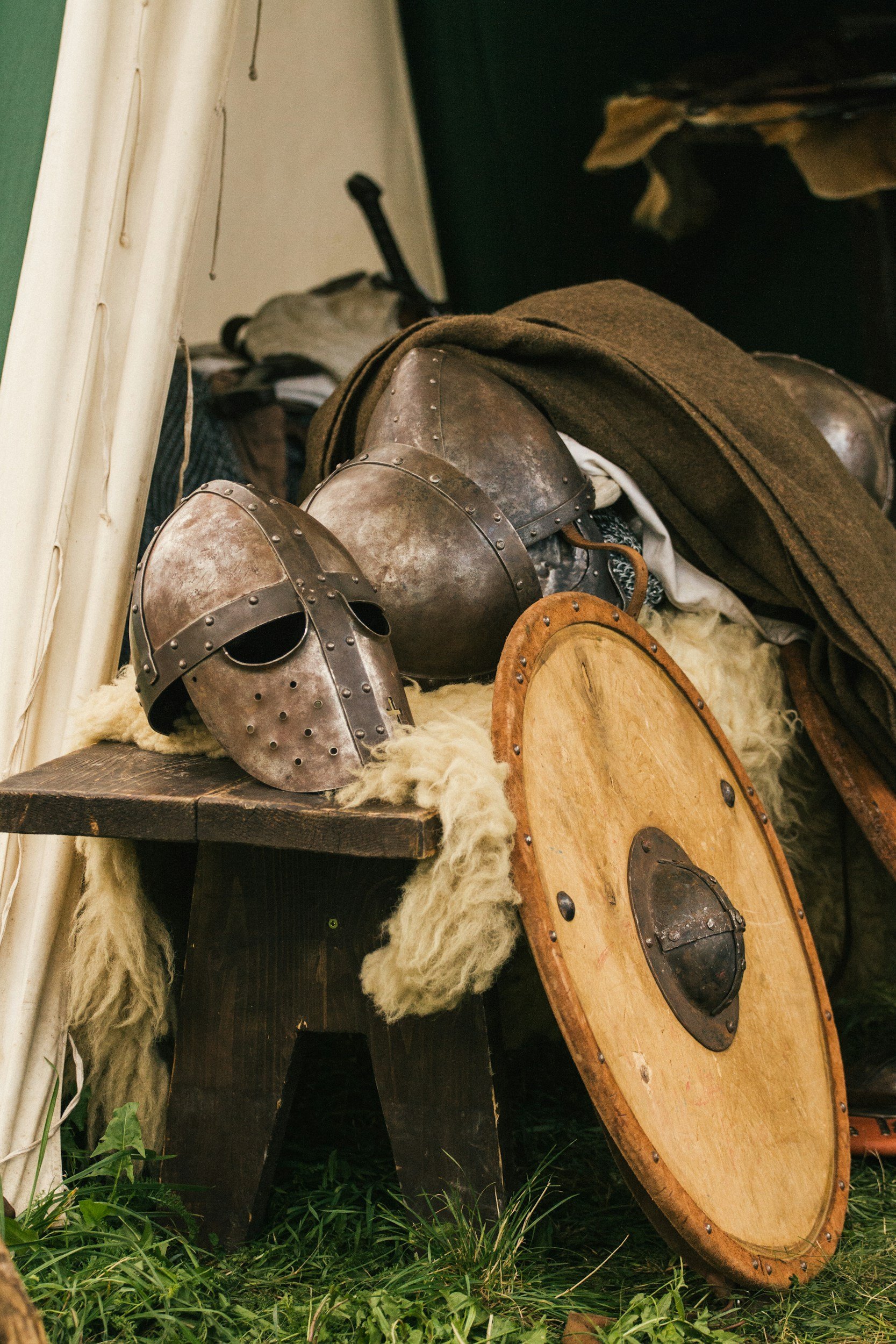
Paul used the image of a Roman soldier to illustrate the battle all believers fight against the spiritual forces of darkness. A few truths to keep in mind before we return to Psalm 40:
Our struggle is not against flesh and blood but against the spiritual forces of darkness described as everything from “the devil” to “the evil one” to “the cosmic powers over this present darkness” to “the evil day.”
The spiritual forces of darkness are scheming against us, casting flaming darts.
It takes the full armor to stand, having done all to stand.
The weapons of our warfare are truth, righteousness, gospel of peace, faith, salvation, the word of God, and prayer.
With that in mind, look how David took up the full armor of God as he wrestled with the spiritual forces of darkness.
He faced the schemes of the devil. David does not detail his struggle very much in this song, but we are given some fairly powerful images. He describes his pain with these words: evils have encompassed him beyond number (12), men seek to snatch away his life (14), and many delight in his hurt (14). We are not told the specifics of his struggle, but that is what makes this prayer accessible to saints like you and me for ages to come. The spiritual forces of darkness encompass us without number to snatch away our lives and delight in our hurt.
He fastened on the belt of truth. The question behind all of our cries for help is the definition of truth. What is true in this situation? Are our troubles more than the hairs on our head (12)? Will the enemy win? Or, will God be our help and deliverer (17)? In the battle for truth, this abrupt shift in the song makes sense. We stand with confidence that the Lord will deliver because He has multiplied His wondrous deeds (5) in our lives in the past. David says with confidence that God has drawn him up from the pit of destruction (2) and God will be his deliverer (17). The abrupt shift in the song is not strange at all. We don’t fasten on the belt of truth in a vacuum. We fasten on the belt of truth because the spiritual forces are trying to get us to believe in a lie.
He put on the breastplate of righteousness. The place of righteousness in the prayers of the psalms challenges new covenant believers, to some degree. In other psalms, David tells God that He should answer his prayer because of his righteousness (see Psalm 18.20). Followers of Christ stumble over this boldness because we know that no one is made righteous by works of the law. But from the days of Abraham, the righteous were justified by faith (see Romans 4.3-5), including David. In this prayer, even though David does not use the word, he is praying from a right relationship with God. David delights to do God’s will (8), has made the Lord his trust (4), and knows the Lord to be his help and deliverer (12). He puts on the breastplate of righteousness by putting his faith in the Lord.
He put on the readiness of the gospel of peace. In the new covenant, the peace we have with God is purchased by the blood of Jesus on the cross (see Colossians 1.20), and this peace with God is how we are able to stand firm in the strength of the Lord. David fights with his enemies from the solid ground of peace with the Lord. David peacefully stands on the rock (2), rejoicing in the steadfast love and faithfulness (10) of His God.
He took up the shield of faith. If faith is the conviction of things not seen (see Hebrews 11.1), then David certainly used the shield of faith to extinguish the fiery darts of the enemy. He proclaimed with faith: “I am poor and needy but the Lord takes thought for me” (17).
He took up the helmet of salvation. In light of the cross, we quickly connect the helmet of salvation with the saving work of Christ on the cross to bring forgiveness of sins and new birth in Christ, but we too need the ongoing saving work of God in our daily struggle with the spiritual forces of darkness. David’s confession was simple: God has saved me (2), and God will save me (17). The helmet of salvation extinguishes the fiery darts of doubt.
He took up the word of God. Everyone knows of the longest chapter in the Bible, David’s exaltation of the word of God in Psalm 119, but Psalm 119 is more than a fancy poem. It is a weapon. And he picks up that weapon in this song, too: “I delight to do Your will, O my God; Your law is within my heart” (8).
He took up praying at all times. Finally, and obviously, he took up the weapon of prayer to withstand against the schemes of the evil one, with all prayer and supplication.
What does this mean for us? Is this just a cute coincidence?
First, have you ever wondered how Paul came up with the different weapons of warfare that he listed in Ephesians 6? Did he just make them up? Did the Spirit just give them to him? Or perhaps, did Paul know of these weapons because he knew how David stood firm against the schemes of the spiritual forces of darkness? In other words, Paul didn’t invent the weapons. He identified them in the prayers of David.
Finally, the armor passage of Ephesians 6 can seem more theoretical than practical. Sure, here are the weapons we are supposed to “take up,” but what does it look like to do that in real time? This psalm, abrupt shift and all, gives us a picture of the armor in action.
So, what fiery dart of the enemy are you trying to extinguish today? You don’t have to fight alone. Take a seat on the pew next to David and let him lead you in the hour of prayer.
Take up the whole armor of God that you may be able to stand in the evil day.
Quotes are from Duane Garrett’s commentary on Psalm 1-72 in the Pillar Old Testament Commentary Series and from Walter Brueggemann’s commentary on the Psalms entitled “The Message of the Psalms.”